
Life Cycle Assessment of Wind Assisted Ship Propulsion
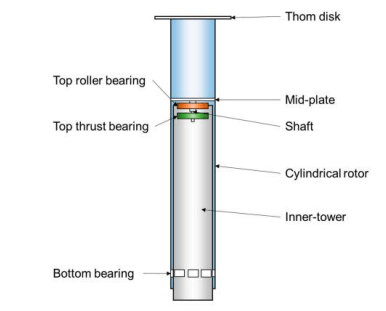
This project investigated the environmental impact of wind assisted ship propulsion, focusing on Flettner rotors as a method of reducing emissions in maritime shipping. The aim was to assess whether this technology could support the decarbonisation of large commercial vessels.
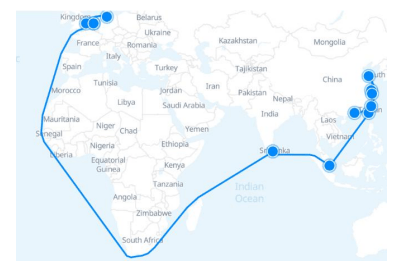
A life cycle assessment model was developed to compare a conventional heavy fuel oil powered vessel with scenarios using Flettner rotors. The study considered well to wake emissions as well as cradle to grave impacts, including manufacturing, installation, operation and end of life stages.
The analysis showed that Flettner rotors could reduce greenhouse gas emissions by around 10.2 percent to 28.2 percent depending on the operating scenario. The results also showed that material selection, manufacturing processes and recycling methods are important factors in the overall environmental performance of the system.
Punch Press Mechanism Analysis
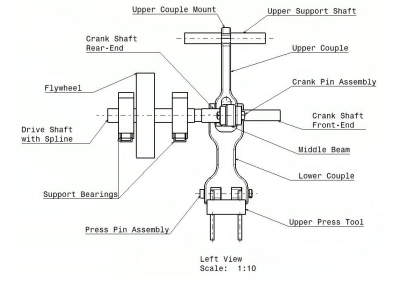
This project focused on the design and analysis of a flywheel driven knuckle joint punch press mechanism. The objective was to evaluate the movement of the system and assess whether a key load bearing component could withstand operating forces.
A full CAD concept was created using CATIA V5 before being imported into MSC ADAMS for dynamic motion analysis. The critical loading conditions from the dynamic simulation were then applied in ANSYS to complete a finite element analysis of the selected component.
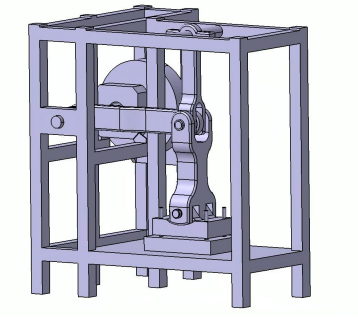
The project identified the main loading conditions acting on the press mechanism and evaluated the structural performance of the component under stress. The analysis demonstrated how CAD, dynamic simulation and finite element analysis can be combined to improve mechanical design reliability.
Automotive Side Mirror Positioning Control System
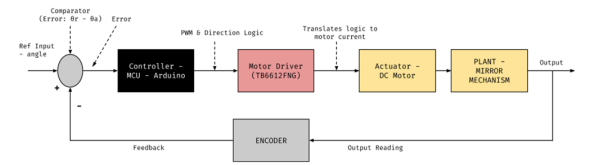
This project involved the development of a closed loop control system for an electric
automotive side mirror. The aim was to control mirror angle accurately and smoothly to improve driver
visibility and vehicle safety.
The system used an Arduino Uno, TB6612FNG motor driver, DC motor and rotary encoder to provide feedback control. Bang bang, proportional and PID control strategies were tested using step response and frequency response experiments.
The mechanism successfully reached target angles of 0, 30, 60 and 90 degrees. PID control produced the best performance, giving the most stable response with reduced overshoot, lower oscillation and faster settling time.
Electric Vehicle Buck Converter Design
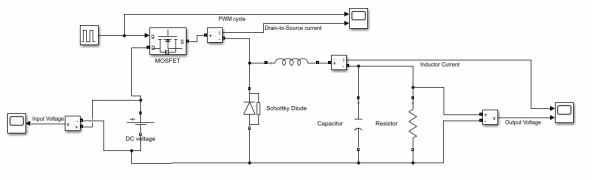
This project explored the design of a step down DC DC buck converter for electric vehicle auxiliary power systems. The aim was to convert a higher battery voltage into a stable 12V output for low voltage vehicle components.
The duty cycle, inductor value, capacitor value and switching frequency were calculated based on voltage and current ripple requirements. MATLAB and Simulink were then used to simulate the circuit and compare theoretical performance with simulated results.
The simulation showed stable voltage output and inductor current behaviour consistent with continuous conduction mode operation. The results confirmed that the selected component values and switching strategy were suitable for efficient power conversion
Subaru WRX STI Lightweighting and Torsional Performance Study
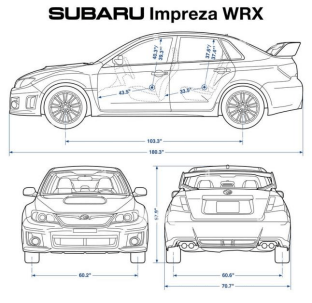
This project investigated how the mass of a Subaru Impreza WRX STI could be reduced while maintaining vehicle structural performance. The focus was on balancing lightweight optimisation with chassis stiffness, handling and safety.
A baseline vehicle mass was established and potential weight reduction areas were assessed across body, suspension and other vehicle systems. A simplified torsional loading analysis was also completed to understand how the vehicle structure responds to twisting forces.
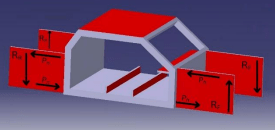
The study found that a realistic mass reduction of around five to seven percent could be achieved without altering the primary load bearing chassis. The project showed that effective lightweighting can improve performance and efficiency when structural stiffness is protected.
Motor Compartment Rail Cross Section Design
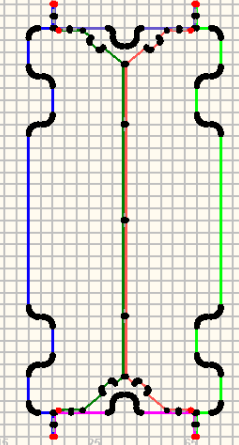
This project focused on the design of a lightweight motor compartment rail cross section for a Subaru Forester front structure. The component needed to resist bending and axial loads while fitting within strict packaging limits.
A standard top hat section was first analysed as the baseline design. An improved thin walled steel section was then developed and assessed using hand calculations and AISI GAS 2.0 to evaluate bending moment, effective area and structural performance.
The improved section achieved a bending moment above the required 10 million Nmm target. The project showed how section geometry, material placement and manufacturability considerations can improve structural performance in automotive body design.
Ford Transit Connect Hybrid Powertrain Study
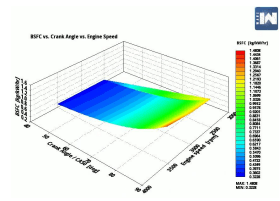
This project investigated the hybridisation of a Ford Transit Connect 230 L2 using a smaller petrol engine as a range extender. The aim was to improve efficiency and reduce emissions while maintaining practical vehicle performance.
Different engine options were compared based on power output, torque, brake specific fuel consumption and emissions. The study also considered engine optimisation and how a smaller engine could operate efficiently within a series hybrid powertrain.
The project showed that series hybridisation can reduce dependence on a larger internal combustion engine by using electric drive for traction. The study demonstrated how a smaller range extender can support improved fuel efficiency and lower emissions in light commercial vehicles.
Series Hybrid Vehicle Modelling and Performance Analysis
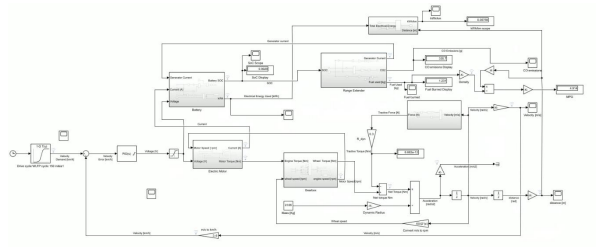
This project developed a performance model of a Ford Transit Connect converted into a series hybrid vehicle. The aim was to evaluate energy use, fuel consumption and emissions under realistic driving conditions.
A Simulink model was created using vehicle dynamics, an electric motor, lithium ion battery and petrol engine range extender. The vehicle was tested using the WLTP drive cycle in both electric only and hybrid operating modes.
The results showed that the series hybrid configuration improved energy efficiency and reduced CO₂ emissions, especially in urban stop start driving. The project demonstrated the suitability of series hybrid systems for light commercial delivery vehicles.
Compressed Air Engine Manufacturing Project
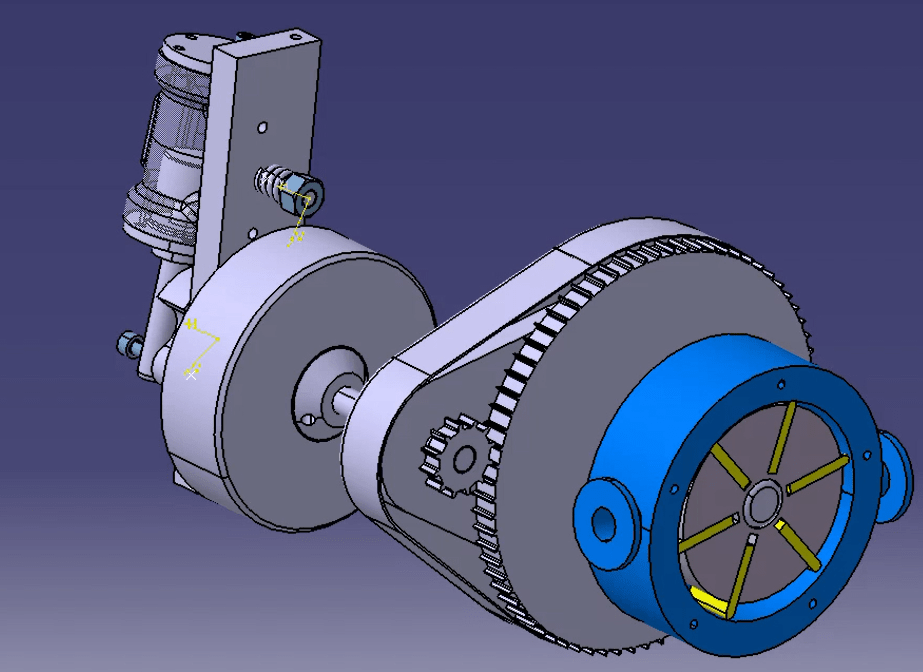
This group project involved the manufacture, inspection and assembly of a functional compressed air engine. The objective was to apply machining, design for manufacture and inspection principles to produce a working mechanical assembly.
Each team member was responsible for a specific component and manufacturing process. My individual contribution focused on producing the crank using the ProtoTRAK SMX 3500 milling machine, including machine setup, machining operations and design for manufacture considerations.
The final engine components were manufactured, inspected and assembled into a functional compressed air engine. The project developed practical skills in machining, manufacturing planning, precision measurement and teamwork.
Composite Golf Club Shaft Project
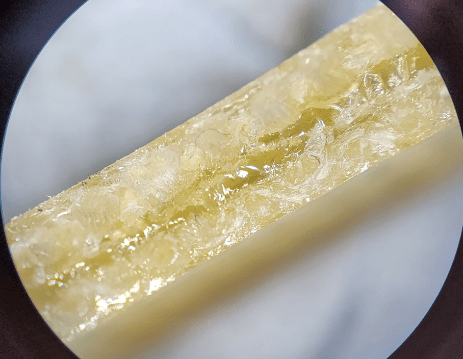
This group project focused on developing a lightweight composite golf club shaft as an alternative to traditional steel and graphite shafts. The aim was to improve performance by reducing weight while maintaining strength and durability.
The project compared the properties of steel, graphite and composite materials in relation to swing speed, vibration, control and fatigue. As group leader and analysis engineer, I contributed to the material research, performance evaluation and design direction.
The project identified the potential benefits of using composite materials to create a shaft that is lightweight, stable and performance focused. It also developed my leadership, analysis and material selection skills within a practical sports engineering application.
Mechanical Science Stress Analysis Portfolio
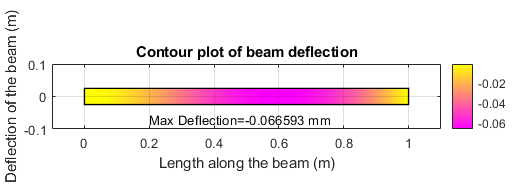
This project applied mechanical engineering theory to a range of stress analysis, failure analysis and vibration problems. The aim was to understand how mechanical components behave under different loading conditions.
The work covered combined stresses, Mohr’s circle, von Mises and Tresca failure criteria, pressure vessel analysis and single degree of freedom vibration systems. MATLAB was used to support calculations, automate analysis and verify results.
The portfolio demonstrated the ability to calculate stresses, assess safety factors and predict failure under complex loading conditions. It strengthened my understanding of mechanical analysis and the use of computational tools in engineering design.
The Better Fan Product Improvement Project
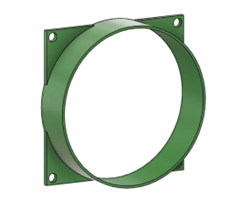
This project involved dismantling and analysing a household table fan to understand how its internal mechanical and electrical systems operate. The aim was to identify how the product could be improved through practical engineering changes.
The fan was taken apart to study the AC motor, capacitor, electromagnetic coils, blade rotation system and oscillation mechanism. Based on the teardown, potential improvements were proposed to protect internal components and improve cooling performance.
The project led to design improvement ideas such as a protective mesh cover for the motor winding and an automatic water spray concept. It demonstrated my ability to analyse everyday products, understand their working principles and propose practical design enhancements.
Formula Student Chassis Design
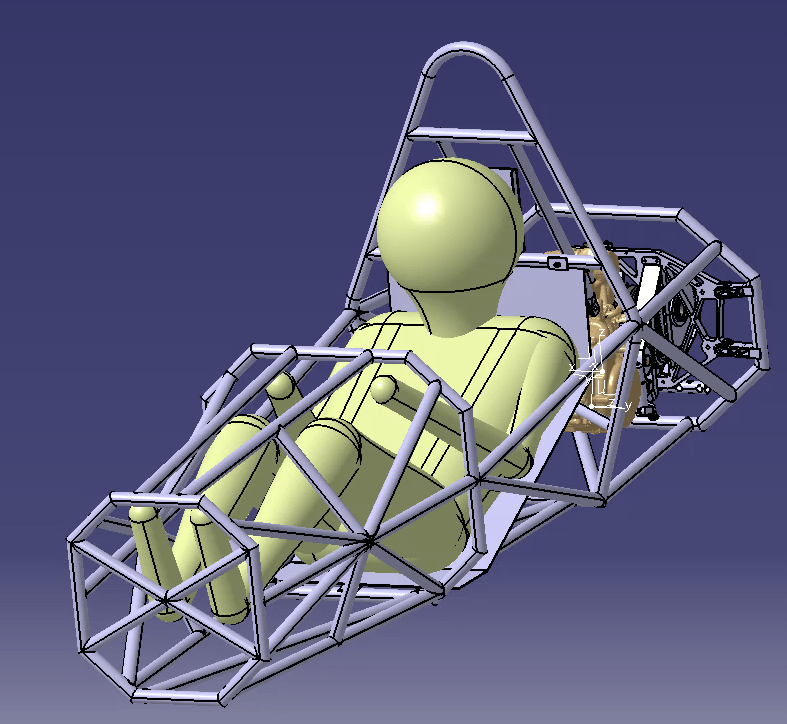
This project focused on the design of a Formula Student spaceframe chassis with consideration of strength, safety, weight, cost and manufacturability. The aim was to create a lightweight tubular structure that could protect the driver, support key vehicle components and meet Formula Student design requirements.
The chassis was designed using a triangulated tube structure to improve stiffness and load distribution. Different mild steel tube sizes were selected for key areas, including roll hoops, side impact members and engine mounts. Torsional analysis, material selection, costing and packaging considerations were used to support the design, alongside decisions for the Aprilia 450 V twin engine, engine mounting points, driver seating position, five point harness and firewall layout.
The final chassis design achieved a total estimated chassis weight of 32.149 kg and included key safety features such as front, steering, main and rear roll hoops, side impact protection and FIA approved harness mounting points. The design demonstrated how structural layout, tube sizing, driver ergonomics and safety regulations can be combined to produce a practical Formula Student chassis concept.
 Dilan Vaghela